
Liverpool’s summer transfer plans are entering an important period as new head coach Andoni Iraola prepares for the 2026/27 season with several gaps still visible in his squad.
The Reds have added young defender Jérémy Jacquet and Spain forward Víctor Muñoz, but those arrivals have been accompanied by the departures of Mohamed Salah, Ibrahima Konaté, Andy Robertson and Rhys Williams. Long-term injuries have further reduced Iraola’s available options.
Liverpool’s reported transfer focus is currently on signing a wide forward, with Paris Saint-Germain’s Bradley Barcola among the players linked. However, the team’s preseason preparations suggest that central defence may be an even more urgent short-term concern.
Iraola does not simply need more players. He needs available, positionally suitable footballers who can support the intense, aggressive and vertical approach he intends to implement at Anfield.
Why is Liverpool’s squad depth a concern?
Liverpool’s problem is partly numerical, but it is also about the distribution of their available players.
The Reds have considerable quality in goal, central midfield and several attacking positions. The concern is that injuries and departures have left some roles heavily dependent on one senior player or on footballers being used outside their strongest position.
Iraola acknowledged during his first Liverpool press conference that two new signings would not be sufficient. He also explained that a demanding season involving domestic competitions and the Champions League could not be managed with only 13, 14 or 15 regularly available players.
Supporters can monitor Iraola’s developing squad, upcoming games and recent results through Liverpool.
Liverpool’s main squad-depth concerns
| Position | Current concern | Priority |
| Centre-back | Gomez injured, Jacquet not fully ready and Leoni recovering from an ACL injury | Urgent |
| Right wing | Salah has departed, and there is no proven like-for-like successor | Urgent |
| Right-back | Bradley remains months away from returning | High |
| Defensive midfield | Heavy dependence on Gravenberch and emergency positional changes | Medium |
| Centre-forward | Ekitiké is recovering from an Achilles rupture | Medium |
| Goalkeeper | Alisson and Mamardashvili provide strong options | Low |
1. Centre-back should be Liverpool’s immediate priority
Liverpool’s most urgent problem is at centre-back.
Konaté’s departure removed an experienced defender who made 183 appearances during five seasons at Anfield. His exit was expected to create space for Jacquet, but the new signing’s shoulder injury has disrupted that succession plan.
Jacquet suffered the injury while playing for Rennes in February and has been managed carefully throughout preseason. Giovanni Leoni, meanwhile, is still recovering from the anterior cruciate ligament injury sustained during his Liverpool debut in September 2025.
The situation became more serious when Joe Gomez suffered a muscle injury during the preseason victory over Sunderland. Iraola subsequently confirmed that the defender would be unavailable for a period, leaving Virgil van Dijk as Liverpool’s only fully fit senior natural centre-back at one stage of preparations.
Young players can provide emergency cover, while Ryan Gravenberch, Wataru Endo and Curtis Jones have experience of temporarily dropping into defensive positions. None of those solutions should be confused with reliable senior centre-back depth across an entire season.
What type of centre-back do Liverpool need?
Liverpool do not necessarily require another expensive long-term project. Jacquet and Leoni already represent the club’s future planning.
The immediate requirement is a defender who is:
- Available to play from the beginning of the season.
- Comfortable defending large spaces behind a high defensive line.
- Strong in one-against-one situations.
- Capable of progressing possession under pressure.
- Experienced enough to partner Van Dijk immediately.
- Versatile enough to cover right-back when necessary.
A reliable centre-back would protect Liverpool against further injuries while allowing Jacquet and Leoni to complete their recoveries without being rushed.
Even if Gomez’s absence proves relatively short, his versatility means he may also be needed at right-back. Depending on him to cover two weakened positions would leave Iraola vulnerable to another injury setback.
2. Liverpool need a right-sided goalscorer, not merely another winger
Replacing Mohamed Salah involves much more than adding another player to the attacking squad.
Salah provided goals, assists, width, availability and a consistent threat from the right side. His departure has left Liverpool without an obvious senior forward who naturally combines those qualities.
Muñoz has arrived from Osasuna after contributing seven goals and five assists in 34 appearances during the 2025/26 season. The 22-year-old has pace, ball-carrying ability and the flexibility to operate on either wing, but it would be unreasonable to expect him to replace Salah’s output immediately.
Liverpool’s other wide options include Cody Gakpo, Rio Ngumoha and Federico Chiesa. Gakpo is most comfortable starting from the left or operating centrally, while Ngumoha remains a developing player. Chiesa can play from the right, but his long-term role remains uncertain.
That leaves Iraola with several forwards capable of playing wide but no established right-sided attacker around whom the post-Salah attack can be rebuilt.
Would Bradley Barcola solve the problem?
Liverpool are reportedly considering a move for Paris Saint-Germain forward Bradley Barcola. The French international would add speed, direct dribbling and high-level attacking quality.
However, Barcola has generally been most effective from the left. Signing him could improve Liverpool’s overall attack without directly replacing the balance Salah provided on the right.
That distinction matters.
The Reds should not select their next attacker solely by reputation. They need to determine whether the player can:
- Start naturally from the right.
- Attack the penalty area consistently.
- Contribute a reliable number of goals.
- Press aggressively in Iraola’s system.
- Create chances without always receiving the ball to feet.
- Cover centre-forward while Hugo Ekitiké remains unavailable.
Barcola could still be a valuable signing because Iraola expects his wingers to operate on both sides. Nevertheless, Liverpool’s recruitment team must ensure the squad contains a genuine right-sided scoring threat rather than collecting several players who all prefer the left.
3. Right-back depth cannot depend on emergency midfielders
Conor Bradley’s significant knee injury has left Liverpool without their expected first-choice right-back for the opening months of the season.
Jérémie Frimpong provides an attacking alternative, but his strengths are most visible when he has freedom to advance. Using him as a conventional full-back in a defensive line can expose areas of his game that are less suited to sustained defensive responsibility.
Liverpool previously used Dominik Szoboszlai and Curtis Jones at right-back, while Gomez can also operate there when fit. Those options demonstrate useful versatility, but repeatedly moving midfielders or centre-backs into the position weakens depth elsewhere.
If Jones or Szoboszlai is required at right-back, Iraola loses a midfield option. If Gomez plays there, Liverpool’s centre-back cover becomes even thinner.
The ideal addition would be a defensively dependable full-back capable of:
- Defending one-against-one against quick wingers.
- Moving into midfield during possession.
- Supporting attacks without abandoning defensive structure.
- Covering both right-back and centre-back.
- Competing with Bradley after his recovery.
Right-back may not currently be Liverpool’s main recruitment focus, but the club should be ready to act if Bradley’s recovery takes longer than expected or another defensive injury occurs.
4. Liverpool need another dependable defensive midfielder
Ryan Gravenberch’s development as a number six reduced Liverpool’s urgency to recruit a defensive midfielder. His composure, ball progression and physical coverage made him an important part of the team.
The problem is the level of dependence placed on him.
Wataru Endo and Stefan Bajčetić have been working their way back toward full training, but neither began preseason completely available. Jones and Szoboszlai can play deeper, although both may also be required in other positions.
Iraola’s preferred football demands intense pressing, aggressive counter-pressing and quick forward progression. That approach requires midfielders capable of covering large spaces when possession is lost.
Liverpool would benefit from another number six who can:
- Protect the centre-backs during defensive transitions.
- Receive possession facing his own goal.
- Resist pressure and progress the ball.
- Compete physically in midfield.
- Allow Gravenberch to rest without changing the team’s structure.
- Play alongside Gravenberch in more demanding fixtures.
This position becomes a greater priority if Jones leaves or if midfielders continue to be used as emergency right-backs.
Does Liverpool also need another striker?
Liverpool have Alexander Isak as their leading centre-forward, but Ekitiké’s Achilles injury has reduced the depth behind him.
Ekitiké is expected to remain unavailable for a significant period. Gakpo can provide central cover, while Chiesa and several younger players offer alternative solutions, but Liverpool would be exposed if Isak suffered an injury.
The most efficient solution may be to sign a versatile wide forward who can also operate through the centre. That would address two weaknesses without creating an overcrowded squad once Ekitiké returns.
A specialist striker would become more urgent only if Iraola is unconvinced by his internal options or if Ekitiké’s recovery extends significantly beyond expectations.
Which Liverpool positions do not require immediate reinforcement?
Despite the concerns surrounding squad depth, Liverpool do not need to recruit indiscriminately.
Goalkeeper
Alisson Becker remains an elite goalkeeper, while Giorgi Mamardashvili provides high-level competition and succession planning. This is Liverpool’s strongest position for depth.
Left-back
Robertson’s departure removed enormous experience, but Liverpool still have Milos Kerkes and Kostas Tsimikas. Unless another player leaves, resources should be directed elsewhere.
Advanced midfield
Florian Wirtz, Alexis Mac Allister, Szoboszlai, Jones, Harvey Elliott and Trey Nyoni give Iraola several creative and attacking-midfield combinations. The greater need is behind them rather than ahead of them.
First-choice striker
Isak gives Liverpool a proven central attacker. The question concerns temporary cover during Ekitiké’s rehabilitation, not the quality of the starting position.
How many signings do Liverpool realistically need?
Liverpool would ideally complete at least two more signings before the transfer window closes:
- A senior centre-back who can contribute immediately.
- A right-sided forward with goalscoring potential.
A right-back or versatile defender should follow if the club has sufficient resources. Another defensive midfielder would also strengthen the squad, particularly if there is a departure before the deadline.
The final number will depend on outgoing transfers. Selling Gakpo, Chiesa, Jones or another established player without first securing a replacement would deepen the current shortage.
Liverpool’s recruitment priorities should therefore be based on availability and positional balance—not simply the number of players registered in the squad.
Iraola’s Liverpool rebuild requires the right profiles
Iraola has inherited a Liverpool team undergoing a substantial transition.
Salah, Robertson and Konaté were not ordinary squad players. They were experienced figures who contributed to major trophies and understood the demands of competing at the top of English and European football.
Muñoz and Jacquet are promising additions, but Liverpool cannot expect two young signings to replace all the experience, availability and specialist qualities that departed this summer.
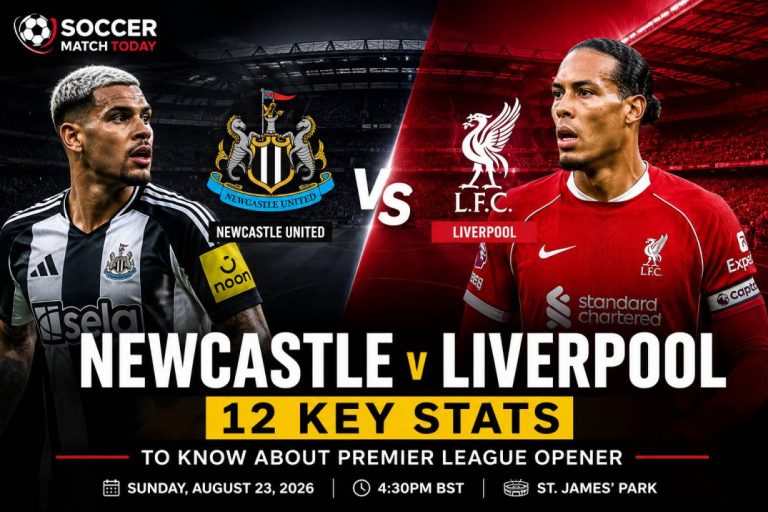
The club’s opening Premier League fixture against Newcastle will provide an early examination of Iraola’s defensive options. Readers can follow the opposition through the Newcastle United team page and monitor the season through the Premier League fixtures, results and standings hub.
Final assessment
Liverpool’s most urgent transfer need is an available senior centre-back. Van Dijk cannot be expected to carry the position while Gomez, Jacquet and Leoni work toward full fitness.
The next priority should be a right-sided forward capable of contributing goals. Liverpool may sign an excellent winger and still fail to replace Salah’s role if that player also prefers operating from the left.
Right-back and defensive midfield complete the four positions requiring attention. Neither is as urgent as centre-back or right wing, but both could become serious weaknesses during a long Champions League season.
Iraola has enough quality to build a competitive starting team. What Liverpool currently lack is the reliable depth needed to protect that team from injuries, fatigue and fixture congestion.
Liverpool should therefore prioritise suitability over transfer-market excitement: a ready senior centre-back, a genuine right-sided scorer and, if possible, a versatile defender or defensive midfielder before the window closes. Matchday performances and new signings can be followed through today’s live football scores.